Dragons are Hollywood’s favorite trope for depicting a powerfully frightening & wild beast.
But did you know there was a middle eastern Christian Saint who was said to have actually slaughtered an actual dragon?
The city of Silene was part of Roman North Africa in the late 3rd century. According to legend, the town was terrorized by a monstrous dragon that lived in the marshes outside the city walls. The dragon’s presence was not a passing threat, but a permanent condition under which the city existed.
The people developed a system of appeasement. If they fed the dragon, it would temporarily refrain from attacking them. At first, they offered it livestock, but eventually it demanded human victims. Victims were chosen by lot and were told their sacrifice was for the good of the city.
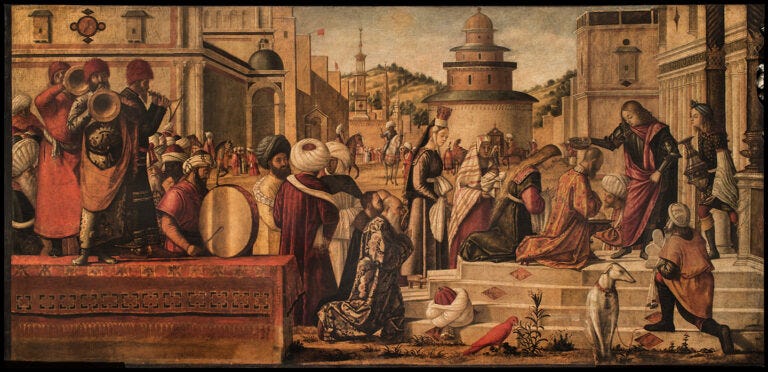
One by one the city slowly surrendered its children until the lot fell upon the kings very own daughter. Gripped by the same fear that pervaded the city, the King dressed his daughter as a bride and sent her as a sacrifice to the dragon.
This is when a humble sojourner entered the scene. St. George was born in Cappadocia, Turkey but his mother had sent him to live in Lydda, Israel. He was traveling through Libya when he came across the town of Silene. He immediately noticed the fear that had gripped the town.
He saw the princess standing alone outside the walls awaiting her fate. She warned George to leave immediately lest he become another victim of the beast. George, now fully aware of the situation, refused to leave.
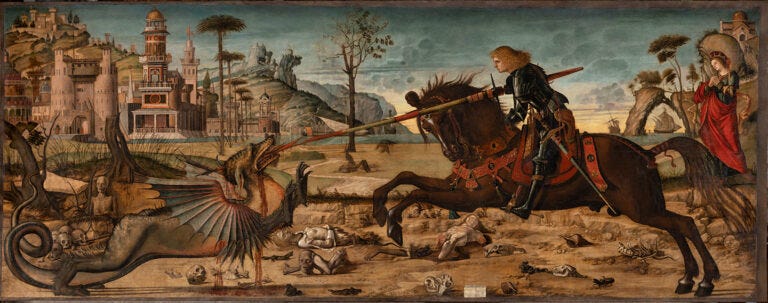
The blood thirsty dragon appeared expecting the standard submission. George, however, charged the beast on horseback and pierced it with his lance. The dragon was not dead, but wounded and subdued- rendered harmless. George told the princess to bind it and lead it through the city.
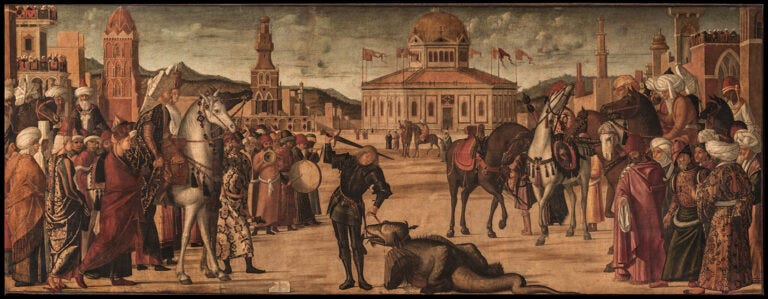
Only after she had led it through the city, did George kill it. Importantly, George did not parade the dragon through the streets himself as a trophy of his achievement. He knew the princess had to do it, to show the city that the culture of fear that had plagued them for generations, was now completely reversed.
Cool story but is it actually true? George was a real Saint who lived at that time in those regions, however the details around the dragon episode didn’t emerge until the high Middle Ages, likely as embellishments. This does not negate the moral impact of the story.
The lessons contained in the story are as true as true can be. A culture that built a way of life around normalized fear and appeasement upended by a single person willing to go against the status quo and confront the source of it all.
“The real power of a society is found not in its laws, but in its habits.” -Alexis de Tocqueville
How many negative mindsets do we pass on to our children? How many normalized fears persist through generations?
We like to imagine that we are independent thinkers, that we are impervious to the cultural trends of our time, and that if we were living in Silene, that we would have been like St. George. In truth, we are much more heavily affected by the culture that surrounds us than we like to think. We probably would have learned to fear the dragon and to appease it, like all those who came before us.
Children learn from their parents, and often subconsciously emulate them even if they don’t want to. Their parents learned from their parents, and so on and so forth.
So is it even possible to break free from generational curses?
Yes.
The unique thing about humans is that we have free will. It’s what separates us from AI. Our actions are not born from pure causality. Therefore, we have the capacity to defy the programming of the world. We can end the familial chains of negative behaviors and mindsets. We can defy cultural trends. We can mount our horse and ride out to meet the dragon.
“You have power over your mind- not outside events. Realize this, and you will find strength.” -Marcus Aurelius